Leaves get the blame for plenty of gutter problems. Sometimes they’re getting off too easy. Here’s how to spot signs that something else needs attention.
Your gutters have one job: give rainwater somewhere to go besides down the side of your house. When they start putting on a waterfall display, it’s worth finding out why.
In October, leaves are an obvious suspect. But sagging sections, leaking joints, and gutters pulling away from the house deserve a closer look. Clearing out debris won’t fix damaged materials or failing supports.
Before you chalk it up to another fall chore, take a look from the ground. A few observations can help a gutter professional assess what’s happening and explain whether the system needs a targeted repair or a more substantial update.
Start With Where the Water Goes
Gutters collect water coming off the roof. Downspouts carry it toward the ground, where the drainage setup should direct it away from the house. The Building America Solution Center explains how gutters and downspouts work together to manage roof runoff and help protect the foundation.
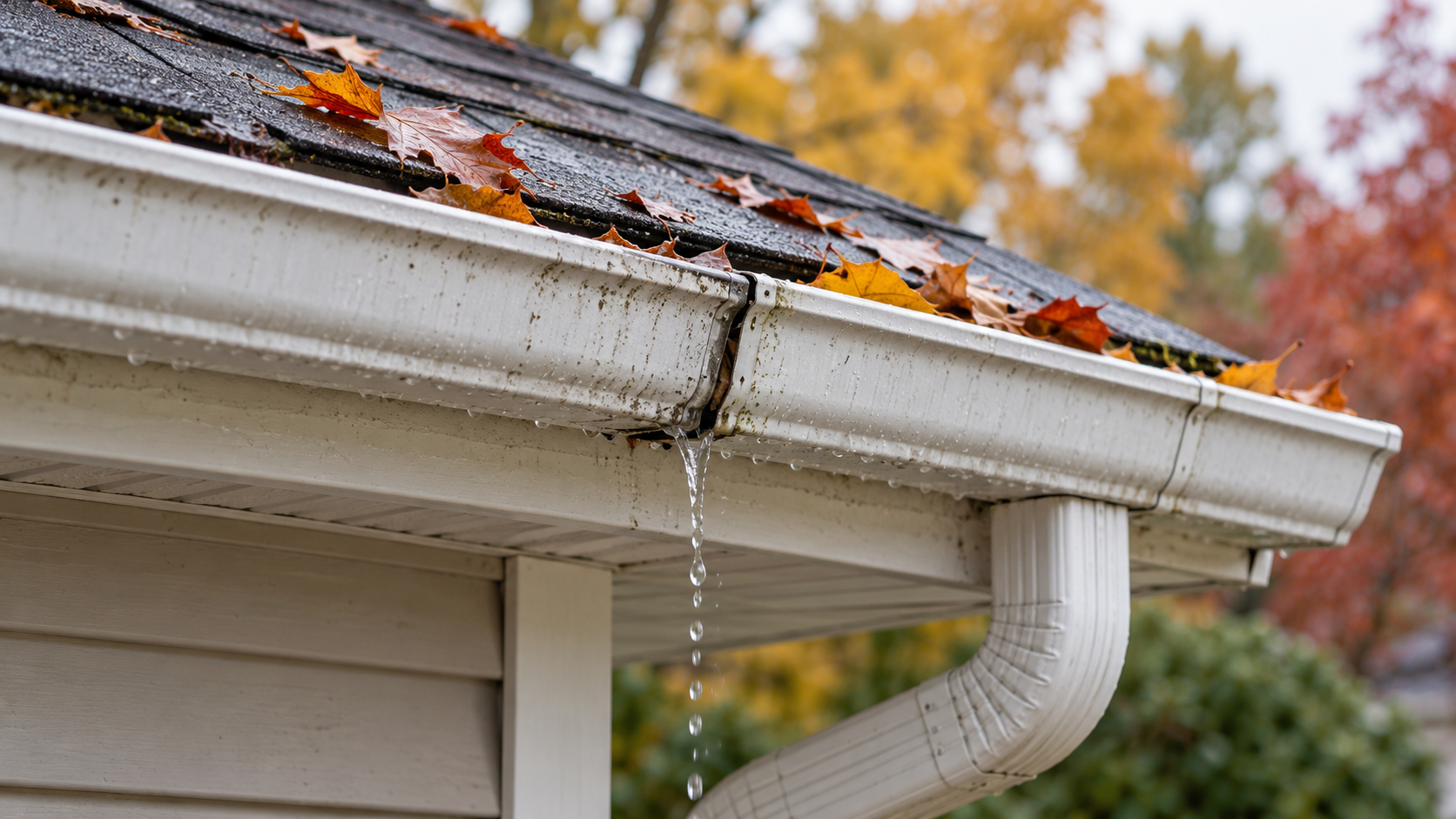
From a safe, sheltered spot, notice what happens when it rains. Does water spill over one corner? Drip from a joint? Run behind the gutter? Does a downspout discharge beside the house, where the water collects?
Those patterns are useful details to share. They are clues, not a diagnosis. A professional can check for a blockage, damaged components, improper slope, or a system that needs a different drainage layout or capacity.
Take photos from the ground if you can do so safely. Leave ladder work and close inspections along the roof edge to a qualified professional. Avoid standing beneath loose or hanging sections.
Look Beyond the Leaves
Cleaning removes debris. It does not restore a damaged gutter or fix the material supporting it. As you look around the house, make note of:
- Sagging or pulling away. A gutter hanging lower in one area or separating from the roof edge deserves an assessment of its supports and attachment points.
- Leaks at seams or corners. Tell the contractor whether one joint leaks or several areas do, and whether previous repairs have held.
- Visible cracks, holes, or distorted sections. Photograph what you can see without climbing. Ask how much of the gutter is affected and whether surrounding sections remain serviceable.
- Staining or peeling around the roof edge. These signs warrant a closer look at where water is going and the condition of the material behind the gutter.
In its guide to fascia and signs of damage, roofing manufacturer GAF identifies sagging gutters, peeling paint, and deterioration as reasons to look more closely at this part of the home.
The fascia is the board or finished surface along the roof edge where many gutters attach. If that support is deteriorating, the scope of work may extend beyond the gutter itself.
Seeing sagging, leaks, or damaged gutter sections?
Ask Whether the Problem Is Isolated or Widespread
A useful assessment should explain both the visible problem and the condition of the rest of the system.
If a contractor recommends a localized repair, ask what makes that approach suitable. Is the issue confined to one connection, attachment point, or section? What did the inspection show about the remaining gutters and their supports?
If replacement is recommended, ask whether it involves one run of gutter or a larger portion of the home. Have the contractor explain the extent of deterioration, any recurring failures, and whether the proposed layout will address the drainage problem you noticed.
A replacement proposal is also an opportunity to ask about gutter size, downspout placement, and where the collected water will go. Replacing the visible channel should be part of a plan for moving water away from the house.
If the inspection also raises roofing concerns, our guide to signs your roof needs attention explains the broader issues worth discussing. Gutter damage alone does not establish that you need a new roof.
Follow the Downspout to the Ground
A gutter can look fine from the street while water collects in the wrong place below it.
Look for disconnected downspouts, missing extensions, and water pooling near the foundation. The University of Minnesota Extension’s guide to basement moisture explains why gutters, downspouts, and the slope of the ground belong in the same drainage conversation.
If you have noticed basement dampness after rain, tell the contractor. Gutters may be part of the explanation, though basement moisture has several possible sources. Ask whether the proposed work addresses the drainage concern or whether another assessment is needed.
Understand What Winter Adds
In areas with freezing weather, fall is a useful time to evaluate drainage before snow and ice complicate the picture. In warmer regions, the same observations still matter when seasonal rain arrives.
Be careful with promises about ice dams. The University of Minnesota Extension explains that they form when snow melts on warmer roof areas and refreezes near colder edges. Heat escaping from the home is a major factor.
A gutter project alone may not address that cause. If ice dams return each winter, ask about the roof and attic conditions as well as the gutters. Leave ice removal and work around an icy roof to professionals.
Get a Clear Scope Before Comparing Prices
Ask for a written estimate that identifies the sections involved, materials, downspouts, removal of existing gutters, and any work needed on the supporting fascia. Find out how additional damage discovered during the project would be documented and priced.
For a broader look at evaluating a provider, our guide to choosing the right home service contractor covers credentials, estimates, and questions to ask before agreeing to work.
Before the visit, pull together a few details:
- Where does water overflow, leak, or collect?
- Which sections appear damaged or detached?
- Has the same problem returned after previous work?
- Are there signs of moisture around the roof edge or inside the home?
- What do you want the proposed work to resolve?
You do not need to arrive with the diagnosis. Bring the observations and ask for an explanation that connects the recommended work to what is happening at your home.
Ready to discuss gutter repair or replacement? Call Home Avengers at (844) 393-1437 to connect with a local gutter professional.