
How Many Times Are You Going to Unclog That Drain?
If your drain keeps clogging after you clear it, the cause may still be there. Here’s what recurring blockages can mean and how to get an explanation that lasts longer than the relief.
In this guide
The takeaway
Establish why the clog returns so you can choose work that addresses it. Bring the history of the problem and ask what the proposed service includes.
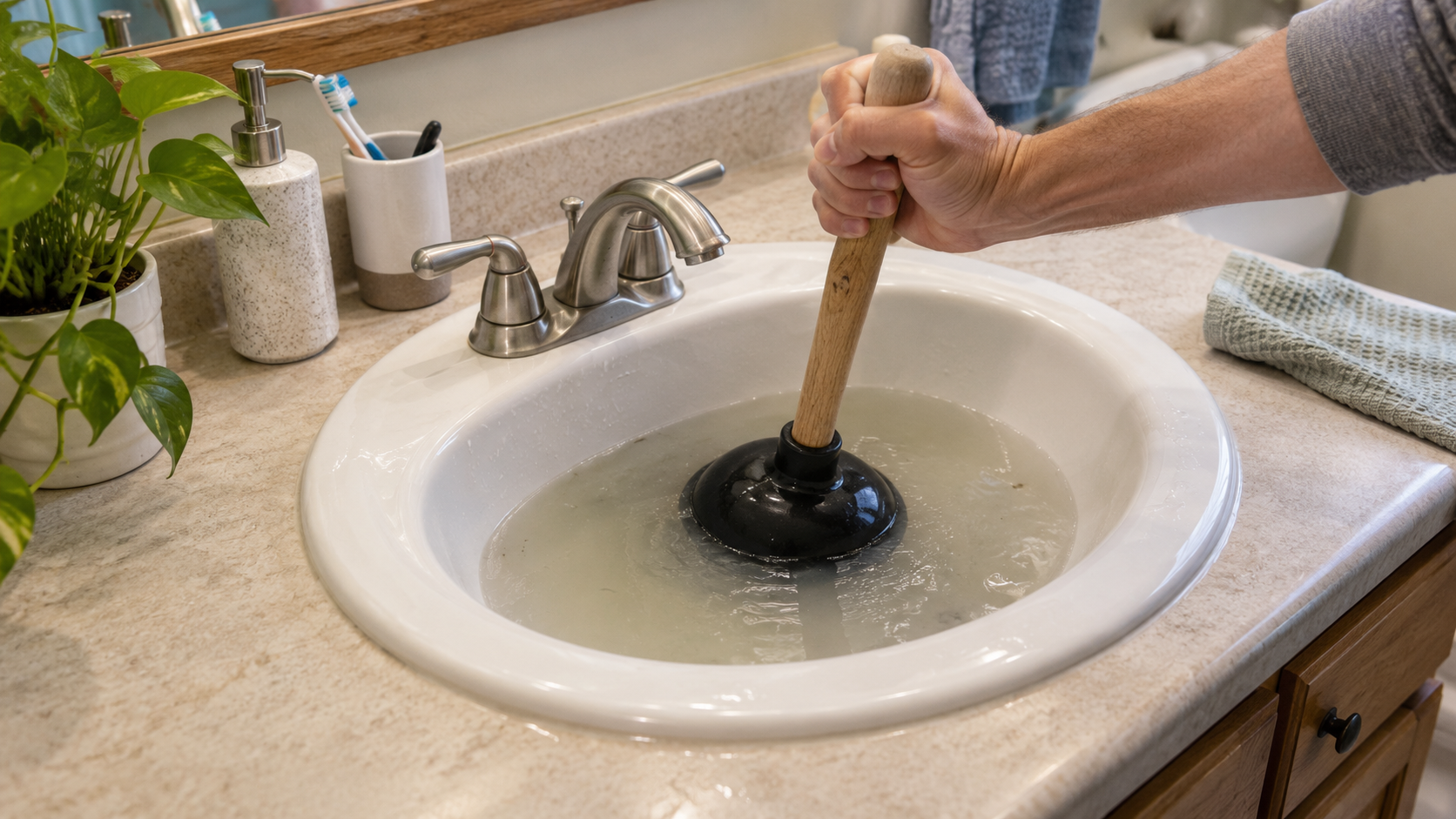
You clear the drain. It behaves for a few days. Then you’re brushing your teeth over a sink that won’t empty again.
Maybe you know exactly where the plunger lives. Maybe you give the shower a few extra minutes to drain before the next person uses it. You’ve developed a routine around plumbing that used to work without your attention.
With Halloween get-togethers and holiday hosting ahead, that routine is getting old. Why does the same drain keep needing another rescue?
Why Your Drain Keeps Clogging
Sometimes the drain is collecting more of what clogged it in the first place. In a bathroom, hair and soap residue can build up. In a kitchen, grease can accumulate in the line. Getting water moving again won’t keep the next batch from going down.
Other times, the clearing leaves part of the obstruction behind. Tree roots are one example: A cleaning can open a passage through a root mass without removing all of it. Water drains again, but there’s still material inside the pipe for debris to catch on.
The pipe itself can also contribute. A sagging section can hold wastewater, and separated joints can let debris enter. Clearing an obstruction doesn’t change the shape or alignment of the pipe. Whether a defect needs repair depends on its severity and effect on drainage.
If your drain keeps clogging, that doesn’t mean it needs excavation. For some known root problems, periodic professional cleaning may be a reasonable maintenance plan. The point is to establish why the clog returns so you can choose work that addresses it.
The Rest of the House Offers Clues
Pay attention to which fixtures are involved. Is the bathroom sink the only one slowing down? Or does the shower gurgle when you flush, with another drain acting up too?
Several slow drains or water backing up into another fixture can point to a blockage in a shared drain or sewer line. These patterns help a plumber decide where to investigate. Yet, they don’t tell you, by themselves, whether the cause is grease, roots or damaged pipe.
Write down when the problem returns after clearing and what was done the last time. “The sink was cleared three weeks ago, then slowed again on Saturday” is useful history. Keep the last invoice handy and mention any drain products you’ve used.
What a Camera Can Show
When a drain keeps clogging, a camera inspection may help explain what is happening farther along the line. It can show the condition of accessible pipes and provide evidence for a recommendation to clean, maintain or repair it.
Timing matters. Standing water can obscure the camera’s view, so clearing a blockage before inspecting may give the plumber a more useful look. Ask why the inspection fits your problem, what stretch of pipe it covers and whether you’ll receive the recording and findings.
If a defect turns up, have the plumber show you where it is and explain how it affects drainage. An image of an imperfection needs context before it becomes a reason to approve a repair.
Make the Next Visit Count
Before authorizing the work, get these three things straight…
- The cause: What has been found, and what still needs to be investigated?
- The scope: What will the quoted service address, and what would cost extra?
- The follow-up: If the drain slows again, what does the provider include?
Keep the proposed work and price in writing. If a substantial repair is recommended, the findings and recording can help you compare another estimate. Our guide to choosing a home service contractor covers checking credentials and comparing what each quote actually includes.
Stop Feeding the Clog
A drain screen can catch hair before it enters the pipe. Empty it into the trash. Keep cooking fats, oils and grease out of the sink, too. Hot water can move grease farther down the line rather than prevent a blockage.
Resist another round of chemical experimentation. Corrosive drain cleaners can cause painful chemical burns. Never mix cleaning products. If you’ve already used one, tell the plumber the product name and when you used it before they begin work.
When Water Comes Back Up
If wastewater backs up into a shower, toilet or floor drain, stop using water in the home and arrange prompt help. More water can actually add to the backup. Then, avoid contact with sewage, keep children and pets away, and contact a plumber. Your local sewer utility may also need to investigate, depending on where the problem is.
You’ve Given This Drain Enough of Your Time
You’ve plunged it, waited it out and hoped this time it would stay clear. If your drain keeps clogging, let the next step be finding out what brings the blockage back.
Home Avengers can help connect you with a plumbing professional to investigate the recurring problem and explain your options. Get the visit on your calendar before the guests arrive and that slow sink becomes part of the evening.